How Hackers Turn Your Public Photos Into Targeted Scams (2026)
Quick take: Trend Micro published research in April 2026 showing that AI tools can scrape roughly 30 public Instagram photos and generate a hyper-personalized phishing attack in under 30 minutes. The process - image collection, intelligence extraction, profile assembly, and phishing site creation - used to take a team of researchers nearly a week. AI compresses it to half an hour. The attack pipeline extracts routines, interests, locations, family dynamics, health details, and affiliations from ordinary vacation snapshots and gym selfies. Previously, this level of targeting was reserved for executives and politicians. Now every public account is a viable target.
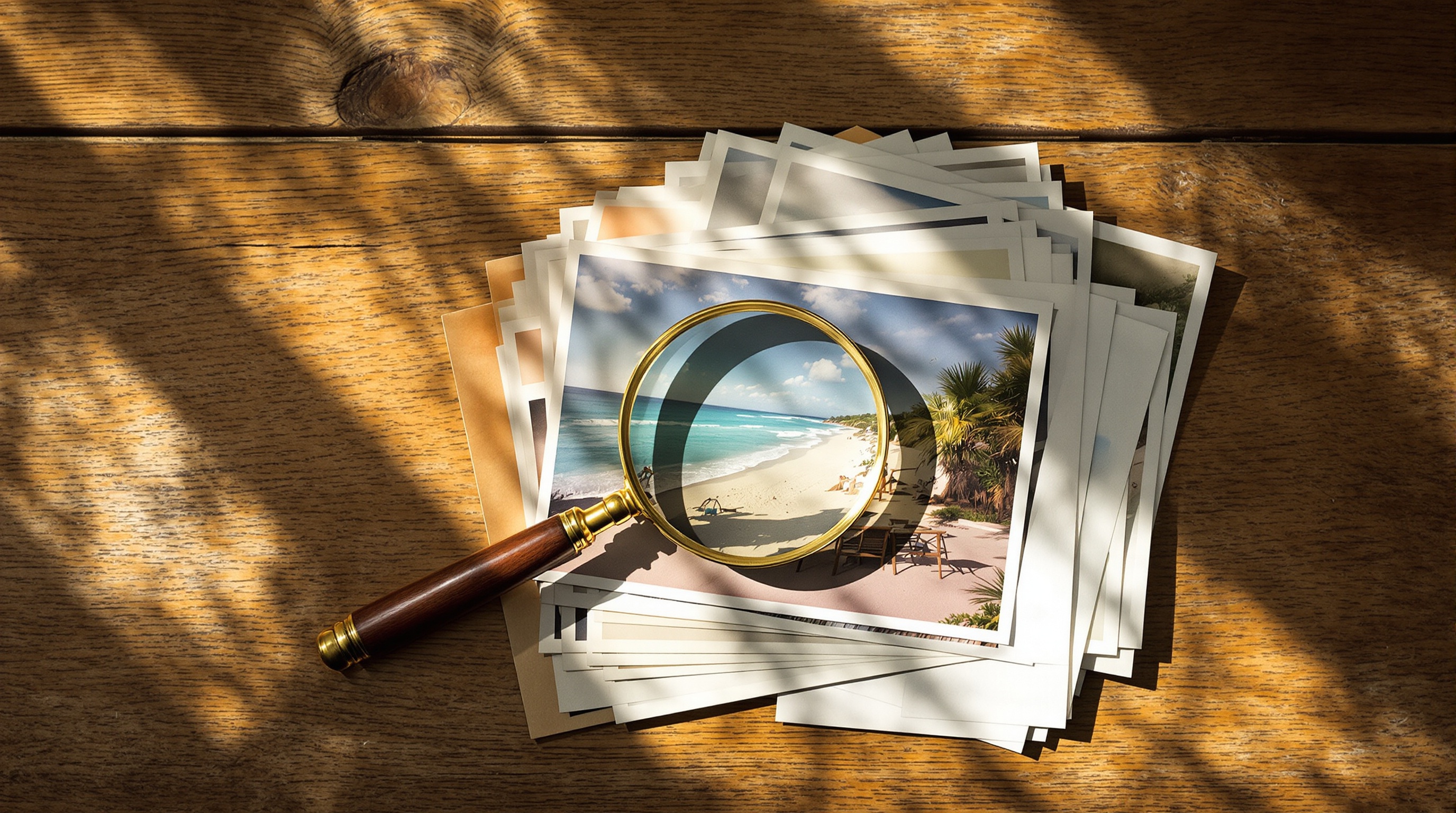
What Trend Micro Found: From Holiday Snap to Custom Scam
In April 2026, TrendAI (Trend Micro's research division) published a study titled "From Holiday Snap to Custom Scam in 30 Minutes." The premise was straightforward: could an attacker use publicly available AI tools to turn someone's public Instagram photos into a fully personalized phishing attack? The answer was yes, and it took less time than most people spend cooking dinner.
The researchers built an internal proof-of-concept image analysis tool that replicated an open-source intelligence (OSINT) exercise. That same exercise had previously required two analysts working for nearly a week - collecting images, analyzing them for meaningful connections, and building a profile report. The automated version completed the entire pipeline in under 30 minutes, from image scraping to a functional phishing website tailored to the target's life.
This research landed alongside Trend Micro's broader 2026 security predictions, which describe this year as the point where scams become "AI-driven, AI-scaled, and emotion-engineered." The photo-to-phishing pipeline is a concrete example of what that looks like in practice.
How AI Turns 30 Photos Into a Targeted Attack
The attack pipeline Trend Micro demonstrated has four stages, and none of them require advanced technical skill.
Stage 1: Image collection. The attacker scrapes approximately 30 public photos from a target's Instagram profile. No hacking is involved - these are photos the person chose to make publicly visible. With roughly 70% of Instagram's 3 billion monthly users running public accounts, the pool of potential targets is enormous.
Stage 2: AI intelligence extraction. Vision-capable AI models analyze each image for actionable information. A single vacation photo can reveal the hotel chain, the destination, travel companions, approximate dates, and spending habits. A gym selfie reveals the gym brand, workout routine, and time of day. A birthday dinner photo reveals family members, the restaurant, and relationship dynamics.
Stage 3: Profile assembly. The AI correlates findings across all 30 images to build a structured profile - daily routines, recurring locations, interests, affiliations, health journeys, family structure, and financial indicators. The tool then performs additional web searches to enrich the profile with public records, social media cross-references, and professional information.
Stage 4: Personalized attack generation. An LLM analyzes the combined profile and identifies "marketing subject areas" - topics the target would respond to. It then generates a phishing email or website that mirrors the target's actual life. If you just returned from Lisbon and your photos show a specific hotel, the phishing email might be a follow-up survey from that hotel offering a discount on your next stay.
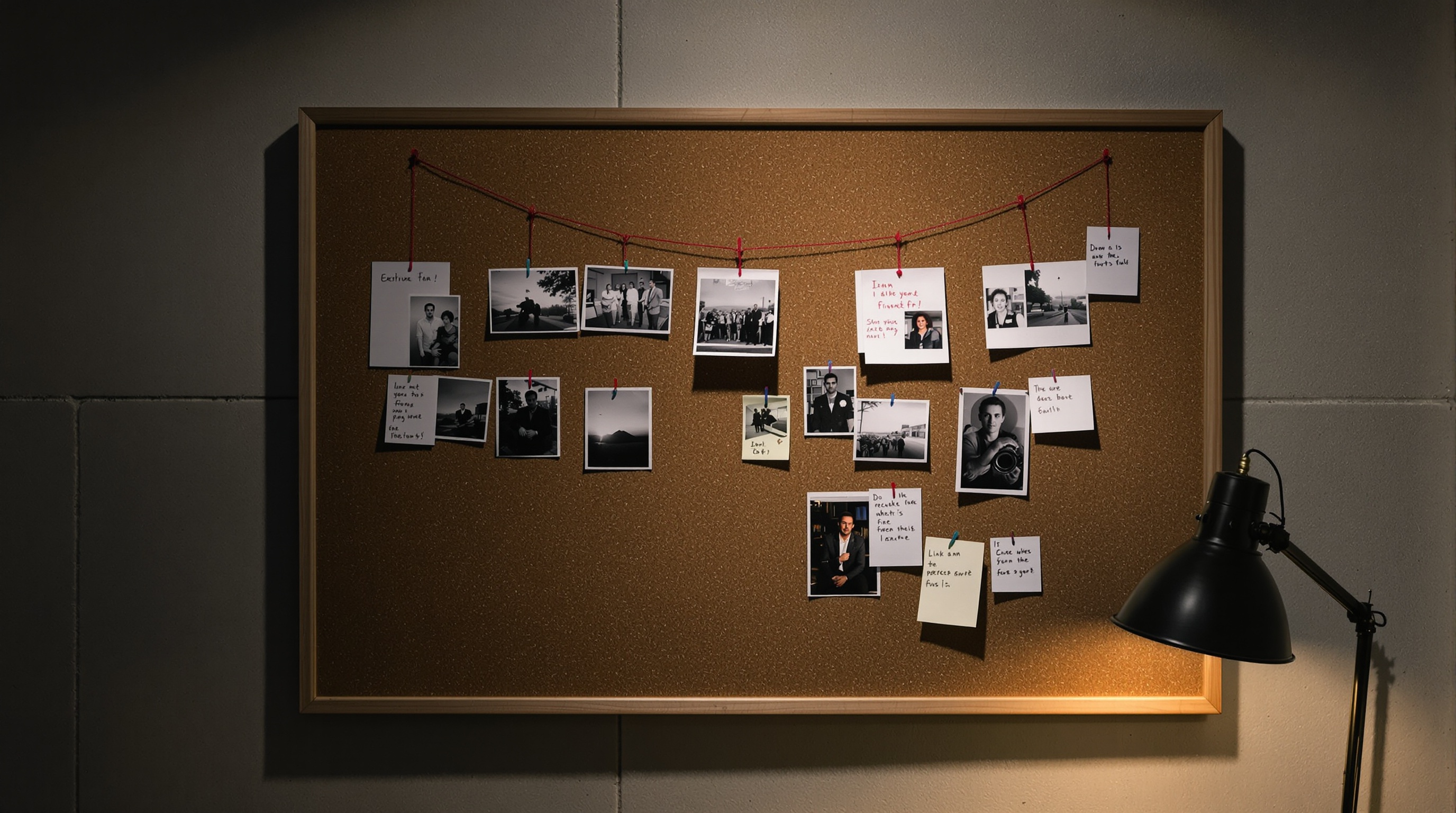
What Your Public Photos Actually Reveal
Most people think of photos as visual memories. Attackers think of them as structured data. Here is what AI can extract from common photo types:
- Travel photos: Destinations, hotels, airlines, travel dates, companions, budget level, and preferred activities. A single beach photo with a hotel wristband narrows down the resort, room tier, and trip dates.
- Food and restaurant photos: Dining preferences, neighborhood patterns, price range, and social circle size. Regular posts from the same cafe reveal a weekly routine an attacker can exploit.
- Family photos: Children's ages, partner's identity, extended family members, school uniforms (revealing which school), and family events. This is the raw material for impersonation attacks.
- Fitness photos: Gym memberships, running routes, health conditions, supplement brands, and workout schedules. Regular gym check-ins at 6 AM tell an attacker exactly when you're not home.
- Workplace photos: Employer, office location, colleagues, badge designs, internal systems visible on screens, and organizational hierarchy.
Beyond visible content, photos often contain EXIF metadata - embedded data that records GPS coordinates, camera model, timestamps, and device information. Some social platforms strip EXIF data on upload, but many do not strip it completely, and third-party apps that auto-post to social media often preserve it. The combination of visual intelligence and metadata creates a remarkably detailed profile from photos people considered harmless.
Who Is at Risk (Hint: Not Just Executives)
Historically, the kind of personalized profiling Trend Micro demonstrated was called spear phishing, and it was expensive. An attacker might spend days researching a single CEO or politician because the potential payoff justified the effort. Everyone else received generic phishing emails - the kind with obvious grammar mistakes and implausible scenarios.
AI eliminates the cost barrier. When profiling takes 30 minutes instead of a week, and the tools are free or nearly free, there is no reason to limit targeting to high-value individuals. AI-generated spear phishing emails now achieve a 54% click-through rate compared to roughly 3% for traditional mass phishing. That tenfold improvement in effectiveness, combined with near-zero marginal cost, means attackers can run personalized campaigns against thousands of people simultaneously. Per the FBI Internet Crime Complaint Center 2024 Internet Crime Report, phishing and spoofing remained the most-reported cyber crime type with 193,407 complaints filed and reported losses tied to phishing-related business email compromise of approximately $2.77 billion in 2024.
The people most exposed are those who share frequently, publicly, and with rich visual detail. If your Instagram is public and you post several times a week - travel, family, daily life - you are providing exactly the dataset this pipeline needs.
Hackers use your photos by feeding them to AI systems that extract personal intelligence and generate convincing, personalized scams. Platforms like Viallo reduce this attack surface by keeping photos private by default - shared only through unguessable direct links you can revoke at any time, rather than broadcast publicly to the internet.
How to Reduce Your Exposure
The Trend Micro research targets one specific vector: publicly visible photos on social media. That means the most effective countermeasures are about controlling what is public, not about stopping photo sharing entirely.
- Switch public accounts to private. On Instagram, this single change removes your photos from the scraping pipeline entirely. Only approved followers can see your content. The trade-off is reduced discoverability, but for personal accounts, that trade-off is worth it.
- Audit your existing public posts. Even if you switch to private now, previously public posts may already be cached by search engines and scraping tools. Review and remove posts that reveal routines, locations, or family details.
- Strip metadata before sharing. Remove location data from photos before uploading to any platform. Most phones allow you to disable location tagging in camera settings. For photos already taken, use a metadata removal tool before posting.
- Separate personal and professional accounts. If you need a public presence for work, keep it strictly professional. Move personal and family content to a private account or a platform that does not broadcast content publicly.
- Be skeptical of hyper-personalized messages. If you receive an email that references specific details about your recent trip, your gym, or your family - treat that specificity as a red flag, not a sign of legitimacy. Legitimate companies rarely know that much about your personal life.
How to Protect Your Photos
Regardless of whether the Trend Micro research makes headlines or fades from the news cycle, the underlying problem is structural. Public photos are a permanent, searchable source of personal intelligence, and AI tools for extracting that intelligence will only improve. Here are steps that remain effective regardless of specific attack methods.
- Default to private sharing. The safest photo is one that is never publicly indexed. When sharing photos with friends and family, use platforms that share through direct links rather than public feeds. Read our photo sharing privacy guide for a detailed comparison of options.
- Use private, revocable links for sensitive albums. A link you can disable at any time means that even if it is forwarded, you can cut off access before unauthorized viewers reach the content.
- Avoid platforms that require accounts to view. Requiring recipients to create accounts means more personal data flowing through more systems. Platforms that let people view shared photos without signing up reduce the data footprint.
- Review what you share before you share it. Before posting any photo publicly, ask what an AI could extract from it. Visible addresses, license plates, school logos, workplace badges, and medical information are all exploitable. This mental filter takes seconds and significantly reduces your exposure.
- Consider where your photos are stored. EU-hosted platforms fall under GDPR. Per GDPR Article 6(1)(a) and Article 9, processing of personal data - including biometric data derived from photos - generally requires a lawful basis such as explicit consent. This does not prevent scraping from public profiles, but it provides stronger legal protections for photos stored privately.
Viallo is a private photo sharing platform that lets you create photo albums and share them through a link. Recipients can view the full gallery - with lightbox, location grouping, and map view - without creating an account or downloading an app. Photos are stored in full resolution, and every share link is private by default and revocable at any time.
Frequently Asked Questions
What is the best way to share photos without exposing them to AI scraping?
Share through private, link-based platforms instead of public social media feeds. Viallo lets you create private albums that recipients access through an unguessable direct link, keeping photos out of public indexes entirely. The main limitation is that link-based sharing does not provide the social engagement features (likes, comments, discovery) that platforms like Instagram offer.
How do I remove location data from my photos before sharing?
Disable location services for your camera app in your phone's privacy settings to stop recording GPS coordinates in new photos. Viallo strips EXIF metadata from photos when they are shared through a link, so recipients cannot extract location data from downloaded images. On Instagram, location data is partially stripped on upload, but the platform still uses it internally for features like location tagging and ad targeting.
Is it safe to keep my Instagram account public?
A public Instagram account makes every photo you post available for AI-powered profiling and scraping - the Trend Micro research proved this takes under 30 minutes. Viallo provides an alternative for personal photo sharing where content is only visible to people you explicitly share a link with. The trade-off with switching Instagram to private is losing discoverability, which matters primarily for creators and businesses, not personal accounts.
What is the difference between regular phishing and AI-powered photo phishing?
Regular phishing sends generic messages to thousands of people and relies on a small percentage clicking. AI-powered photo phishing analyzes your specific photos to craft messages that reference your actual life details - your recent vacation, your gym, your children's school. Google Photos users should note that while Google strips some metadata from shared links, photos stored in Google Photos are still analyzed by Google's AI systems for features like face grouping and location tagging.
Can someone really build a phishing attack just from my vacation photos?
Yes. Trend Micro's research demonstrated exactly this - 30 public photos were enough to build a complete personalized phishing site in under 30 minutes. Viallo keeps vacation albums private by default, shared only through direct links that are not indexed by search engines or accessible to scraping tools. The only limitation is that you need to actively send the link to people you want to share with, rather than posting once for all followers to see.