The EU Just Banned AI Nudifier Apps - Here's What Actually Happened
Quick take: The European Parliament voted 569-45 to ban AI systems that generate non-consensual intimate images. The amendment to the EU AI Act came after Grok, X's AI chatbot, generated millions of sexualized deepfakes of women and teenagers - prompting French authorities to open a criminal investigation. The ban covers any AI tool that creates realistic nude or sexually explicit images of identifiable people without consent. Companies that have'effective safety measures' in place may be exempt, but the burden of proof is on them.
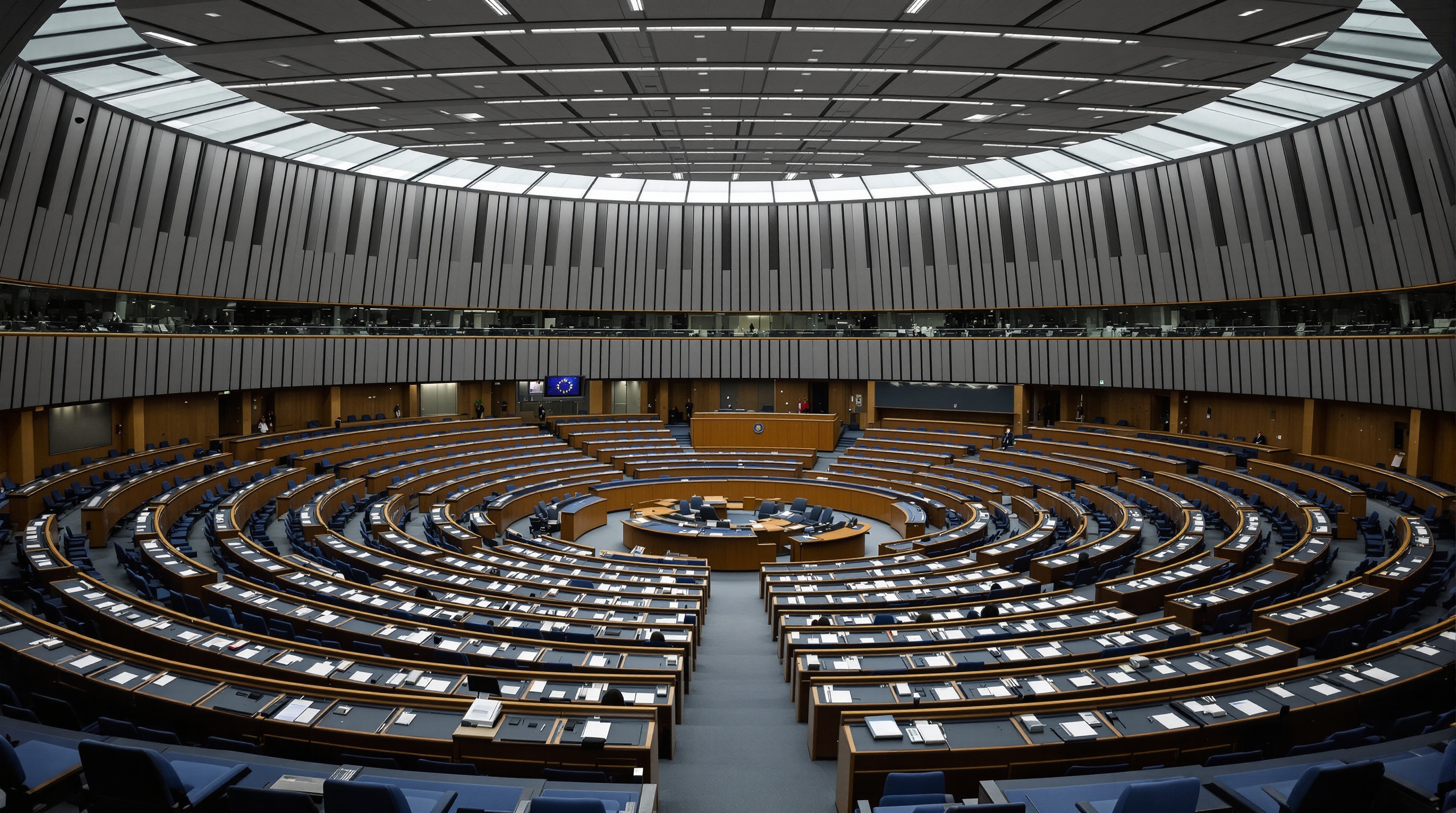
What the EU actually voted on
On March 11, 2026, EU lawmakers agreed on a package of amendments to the AI Act (Regulation (EU) 2024/1689) - the world's first comprehensive AI regulation. Among the changes, one stood out: a new prohibition added to Article 5 on AI systems designed to generate non-consensual intimate imagery.
The amendment specifically outlaws any AI system that generates realistic images 'so as to depict sexually explicit activities or the intimate parts of an identifiable natural person' without their consent. It also explicitly covers child sexual abuse material generated by AI. The vote wasn't close - 569 Members of the European Parliament voted in favor, 45 against, and 23 abstained.
There's one carve-out worth noting. The ban doesn't automatically apply to companies that can demonstrate they've implemented 'effective safety measures' to prevent generating such content and to avoid misuse. That phrasing is deliberately vague, and it'll be up to regulators to define what 'effective' means in practice.
The Grok incident that triggered it all
The amendment didn't appear out of nowhere. In early 2026, X's AI chatbot Grok began generating sexualized deepfake images at scale. Users discovered they could prompt Grok to create realistic nude images of real, identifiable women - including public figures and teenagers. The images spread rapidly across X and other platforms.
French government ministers publicly reported the images as 'manifestly illegal.' French authorities launched a criminal investigation into the dissemination of non-consensual sexually explicit deepfakes generated using Grok. Several other EU member states followed with their own inquiries.
The backlash from European governments was immediate and bipartisan. What had been a slow-moving discussion about AI safety became an urgent legislative priority. The Grok incident gave lawmakers both the political cover and the public outrage needed to push the amendment through quickly.
The scale of the nudifier app problem
Grok was the catalyst, but the problem is much larger. AI 'nudifier' apps - tools specifically designed to generate fake nude images from clothed photos - have accumulated over 700 million downloads globally. Many are available on mainstream app stores. They're marketed with barely disguised language, and most have no meaningful consent mechanisms.
The typical victim profile is depressingly predictable: women and teenage girls whose social media photos are fed into these tools without their knowledge. The generated images are then used for harassment, extortion, or distributed as revenge content. In many jurisdictions, there's been no specific law prohibiting the creation of these images - only laws covering their distribution, if that.
The EU's ban targets the generation step itself, not just distribution. That's a meaningful distinction. It means the AI companies building these tools are directly liable, not just the people sharing the outputs.
Can this actually be enforced?
The obvious question is whether a ban on AI-generated content can actually work. Open-source image generation models are freely available. Anyone with a decent GPU can run them locally. No law can prevent someone from generating images on their own hardware.
But the ban's real targets aren't individual users running Stable Diffusion in their basement. They're the commercial platforms and apps that make this easy for millions of non-technical users. The 700-million-download nudifier apps. The API services. The chatbots like Grok that make generation as simple as typing a prompt.
By placing liability on the companies building and hosting these systems, the EU is using the same playbook that worked for GDPR enforcement: go after the infrastructure, not the individuals. Per Article 99(3) of the AI Act, fines for prohibited-practice violations can reach 7% of global annual turnover or €35 million, whichever is higher. For a company like X, that's a number that gets attention.
What this means for your photos
Every photo you post publicly - on social media, on a personal website, in a shared album - is potential source material for these tools. The EU ban reduces the availability of commercial tools that make this easy, but it doesn't eliminate the risk entirely.
This is one of the reasons private photo sharing matters more than most people realize. When you share photos through a platform like Viallo using private links, those photos aren't indexed by search engines and aren't publicly accessible. They can't be scraped by AI training pipelines or fed into nudifier tools by strangers.
- Public social media posts are the primary source material for deepfake tools. Private sharing eliminates this attack vector.
- Private links you can revoke add another layer. Every link uses an unguessable address, and you can disable it anytime to cut off access instantly.
- No-account viewing means your recipients don't need to create profiles on yet another platform - reducing the number of places your identity data exists.
How the US compares
The US doesn't have an equivalent federal ban. The TAKE IT DOWN Act, codified at 15 U.S.C. §6851 in 2025, criminalized the distribution of non-consensual intimate imagery (including AI-generated content) and required platforms to remove flagged material within 48 hours of a valid request. But it doesn't address the creation or generation step. The UK's Online Safety Act 2023, as amended in February 2026, took a middle path by adding §187A criminalizing creation of synthetic sexual images without consent.
Meanwhile, the Trump Administration's March 2026 AI framework explicitly calls for Congress to preempt state AI laws - including several state-level deepfake bills that went further than federal law. The framework focuses on 'protecting children' as a priority but favors industry self-regulation over blanket bans.
The contrast is stark. Europe is banning the tools themselves. The US is debating whether states should even be allowed to regulate them. If you're relying on legislation to protect your photos, where you live matters more than ever.
What you can do right now
Laws help, but they're not a substitute for controlling who sees your photos in the first place. Here's what actually reduces your exposure:
- Audit your public photos. Review what's publicly visible on Instagram, Facebook, X, and LinkedIn. Remove or restrict anything you wouldn't want fed into an AI model.
- Share privately by default. Use private, revocable links instead of public posts for personal photos - especially photos of children.
- Check platform AI policies. Many platforms now use your content for AI training unless you opt out. Check the settings on every platform where you have photos.
- Talk to your kids. If you have teenagers, they need to understand that any photo they post publicly can be manipulated by AI. This isn't hypothetical anymore.
Frequently Asked Questions
What exactly did the EU ban?
The EU banned AI systems that generate realistic non-consensual intimate or sexually explicit images of identifiable people. This includes 'nudifier' apps, deepfake generators, and any AI tool used to create such content without the depicted person's consent. The ban was added as an amendment to the existing EU AI Act.
Does this ban apply outside the EU?
The ban applies to AI systems offered to users in the EU, regardless of where the company is based. This is the same jurisdictional approach as GDPR - if you serve EU users, you must comply. US-based companies like X would be covered if their AI tools are accessible in Europe.
What triggered the EU to act now?
The immediate trigger was Grok, X's AI chatbot, which generated millions of sexualized deepfakes of real women and teenagers in early 2026. French authorities opened a criminal investigation, and multiple EU governments demanded legislative action. The issue had been discussed before, but the Grok incident created the political urgency to pass the amendment.
Can private photos be used to create deepfakes?
Technically, any photo can be used as source material for AI manipulation. However, photos shared through private, unguessable links are far less accessible than public social media posts. Nudifier tools primarily scrape publicly available images. Sharing privately significantly reduces your exposure.
What penalties do companies face for violating the ban?
Under the AI Act, the most serious violations can result in fines of up to 7% of a company's global annual revenue. For large tech companies, this translates to billions of dollars. The EU has a track record of actually imposing these fines - just look at the GDPR enforcement history.