Healthcare Data Breach: Why Your ID Photos Are at Risk (2026)
Quick take: Hackers stole passport photos, driver's license images, and fingerprints from 1.8 million people in the NYC Health + Hospitals breach - through a third-party vendor, not the hospital itself. Your doctor's office, insurance provider, and government agencies all hold copies of your ID photos, and their security is only as strong as their weakest contractor. This post breaks down what happened, why healthcare institutions are a photo privacy blind spot, and what you can do about the ID photos you've already handed over.
What Happened at NYC Health + Hospitals
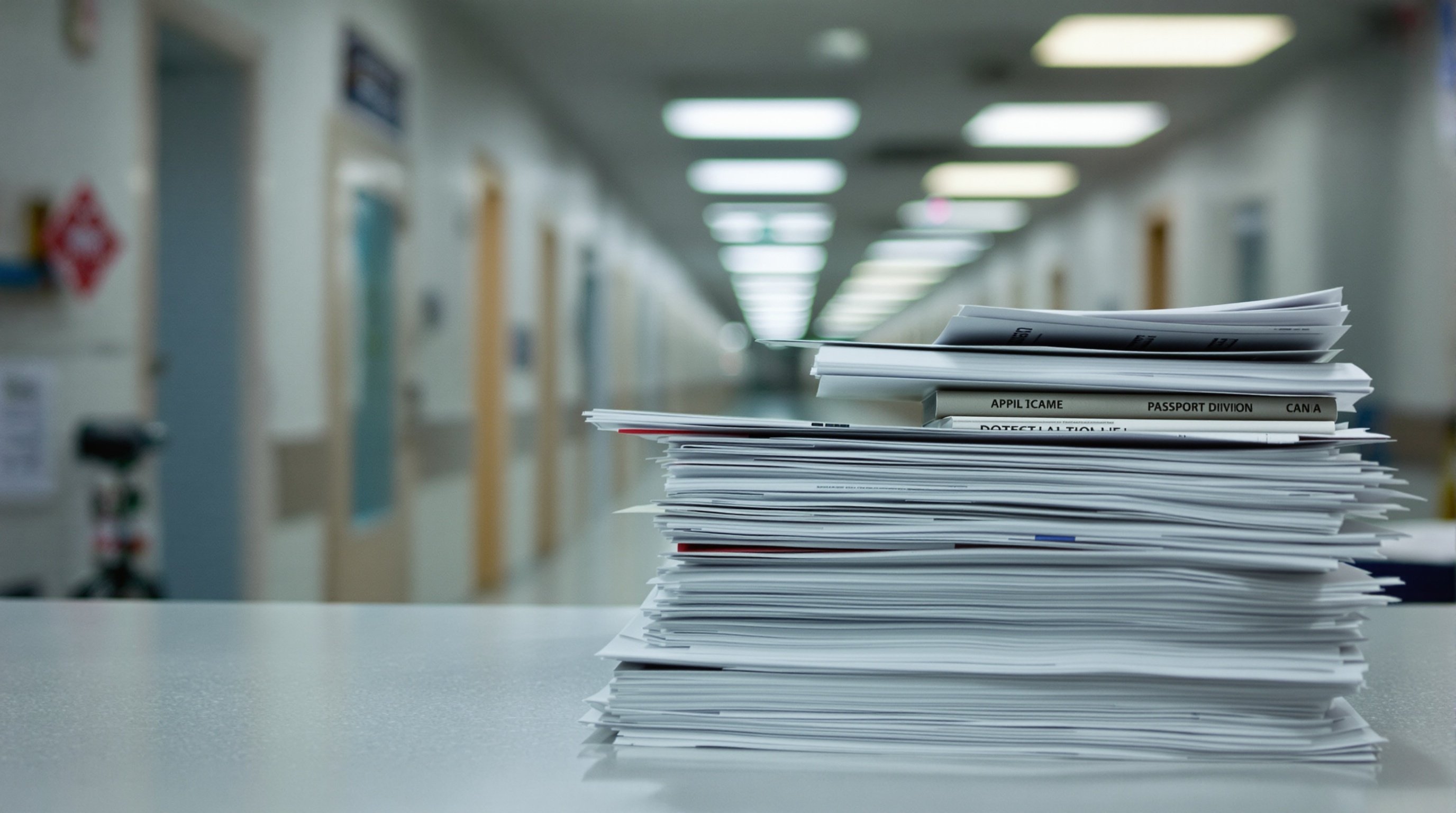
In May 2026, NYC Health + Hospitals - the largest public healthcare system in the United States - disclosed that hackers had accessed sensitive data belonging to at least 1.8 million people. The breach didn't happen through a hospital computer. It happened through a third-party vendor that processed patient records.
The attackers had access from November 2025 through February 2026 - roughly four months before anyone noticed. During that window, they exfiltrated medical records, billing information, Social Security numbers, and something most people don't think about when they check into a hospital: their identity photos.
Passport photos. Driver's license scans. Fingerprints. The kind of biometric data that you hand over at a check-in desk without a second thought, trusting that a public hospital system will keep it secure. That trust was misplaced - not because the hospital was careless, but because the chain of custody for your data extends far beyond the building where you showed your ID.
What the Hackers Actually Got
Most data breach headlines focus on Social Security numbers and financial information. The NYC Health breach included those, but the photo and biometric data is what makes this one different. Here's the full list of what was compromised:
- Medical records and treatment histories
- Billing and insurance information
- Social Security numbers
- Passport photographs - high-resolution face images tied to your legal identity
- Driver's license images - front and back scans, including address, date of birth, and physical description
- Fingerprints - biometric data that cannot be changed if compromised
You can change a password. You can freeze your credit. You cannot change your face or your fingerprints. When biometric data leaks, the damage is permanent. A stolen passport photo paired with your full name and date of birth is everything a bad actor needs for identity fraud, synthetic ID creation, or deepfake generation.
What's worse: the ID photos you submit to healthcare providers often contain embedded EXIF metadata - including the GPS coordinates of where the photo was taken and the device that captured it. If the hospital stored the original scan without stripping metadata, the hackers got your location history as a bonus.
Why Healthcare Is a Photo Privacy Blind Spot
When people think about photo privacy, they think about social media. They think about Google scanning their library or Meta training AI on their selfies. Those concerns are valid. But the photos you voluntarily hand to healthcare providers, government agencies, and financial institutions get almost no scrutiny - even though these organizations hold some of the most sensitive images of you that exist.
Think about every place that has a copy of your ID photo right now: your doctor's office, your health insurer, your bank, your employer's HR department, the DMV, the passport office, the TSA, your pharmacy. Each of those organizations has its own data retention policy, its own vendor relationships, and its own security posture. You agreed to hand over your photo once, and now copies of it sit in dozens of databases you'll never audit.
Healthcare is particularly vulnerable because the industry lags behind tech companies on cybersecurity spending. Hospitals run on thin margins. Their IT budgets go to electronic health records and compliance software, not penetration testing and zero-trust architecture. According to IBM's 2025 Cost of a Data Breach report, healthcare has been the most expensive industry for data breaches for 15 consecutive years, averaging over $10 million per incident.
The Third-Party Vendor Problem
The NYC Health breach followed a pattern that's become depressingly predictable: the attackers didn't hack the hospital directly. They compromised a third-party vendor that had access to patient data. This is the same pattern behind the Crunchyroll breach and dozens of other incidents where the weakest link wasn't the company you trusted with your data - it was the contractor they outsourced to.
When you show your passport to a hospital receptionist, you're implicitly trusting not just the hospital, but every vendor in their data processing pipeline: the scanning software, the records management company, the cloud storage provider, the backup service, the billing processor, and anyone else who touches that data downstream. You'll never know who these vendors are, and you have no way to evaluate their security.
This is fundamentally different from the photo privacy risks on consumer platforms. When you upload photos to Google Photos or iCloud, you can at least read the privacy policy, check the encryption standards, and decide whether the tradeoff is worth it. When a hospital scans your license at check-in, you have no such choice. It's a condition of receiving care.
How to Protect Your ID Photos
You can't refuse to show ID at a hospital or government office. But you can reduce your exposure and make it harder for leaked photos to be weaponized against you.
- Ask whether a scan is necessary. Some facilities scan your ID out of habit, not legal requirement. Ask if they can verify your identity by viewing the document without keeping a digital copy.
- Request data deletion after treatment. Under HIPAA, you have the right to request an accounting of disclosures. Under state privacy laws and GDPR in Europe, you may have the right to request deletion of data that's no longer needed for treatment.
- Strip metadata from photos before submitting digital copies. If a provider asks you to upload an ID photo through a portal, use a tool to remove EXIF data first. There's no reason your GPS coordinates need to travel with a passport scan.
- Monitor for misuse. Set up identity monitoring through your state's attorney general office or a credit monitoring service. If your ID photos were part of a breach, watch for synthetic identity fraud - accounts opened using your photo paired with fabricated details.
- Keep your personal photos on platforms you control. The photos you choose to share - family memories, travel albums, daily life - should live somewhere with strong privacy defaults, not on a platform that scans, indexes, or shares them with third parties.
The Bigger Picture: Photos You Didn't Choose to Share
Most of the photo privacy conversation focuses on photos you actively share - posts on Instagram, albums on Google Photos, files sent through WhatsApp. Those are important. But the NYC Health breach is a reminder that some of your most sensitive photos - the ones tied to your legal identity - are floating through systems you never chose and can't control.
Viallo is a private photo sharing platform built around the idea that your photos should stay under your control. Albums shared through Viallo use unguessable private links you can revoke anytime, store photos in full resolution on EU servers, and don't scan or index your images. Recipients can view shared albums without creating an account. It's designed for the photos you actively choose to share - the ones where you get to decide who sees them and for how long.
That's the contrast worth noticing. The photos you share intentionally through a platform like Viallo or iCloud are probably better protected than the passport photo sitting in a hospital vendor's database right now. The photos you hand over involuntarily - to institutions, governments, and their unknown contractors - carry the highest risk and get the least attention.
Frequently Asked Questions
What is the best way to protect my ID photos from data breaches?
The most effective step is minimizing how many organizations hold digital copies of your ID. Ask whether a scan is truly required or if visual verification is sufficient. When digital submission is unavoidable, strip EXIF metadata before uploading. For the photos you actively choose to share - family albums, travel collections - a platform like Viallo stores them in full resolution on EU servers without scanning or indexing. Google Photos offers strong security but scans your library for AI features.
How do I know if my photos were part of the NYC Health + Hospitals breach?
NYC Health + Hospitals is required to notify affected individuals directly. If you received care at any of the system's 11 hospitals or 70+ community health centers and submitted a government ID, you may be affected. Check the NYC Health + Hospitals website for breach notification details and contact their dedicated hotline. You can also monitor HaveIBeenPwned.com to check if your email appeared in the breach data.
Is it safe to submit ID photos through online patient portals?
It depends entirely on the portal's security and the organization's vendor chain. Encrypted portals with SOC 2 compliance are safer than email attachments, but you still can't control what happens to the image after upload. Before submitting, strip metadata using a tool like Viallo's metadata editor or a standalone EXIF remover. Never email an unencrypted photo of your ID - that's the least secure option available.
What is the difference between a photo data breach and a password breach?
Passwords can be changed. Biometric data - your face, your fingerprints - cannot. A stolen passport photo paired with personal details enables identity fraud that's much harder to remediate than a compromised password. With passwords, you reset and move on. With biometric data, the exposure is permanent. Google Photos and Viallo both use strong encryption for stored photos, but neither can protect images you've already submitted to healthcare or government systems.
Can hospitals legally keep my ID photos indefinitely?
Retention rules vary by jurisdiction. HIPAA requires covered entities to retain medical records for 6 years, but many states mandate longer periods, and ID verification documents often fall into a gray area. Under GDPR in Europe, you can request deletion of data that's no longer necessary for its original purpose. In the US, California's new DELETE Request platform lets residents demand data broker deletion. If you're concerned about an old ID scan sitting in a hospital's system, contact their privacy officer and request an accounting of your data.